
Gosport
Communities are influencing what's happening in their town
Date: 24 August 2026 Author: Bethany Brown
Throughout March and April, we delivered a Participatory Grantmaking pilot in Gosport.
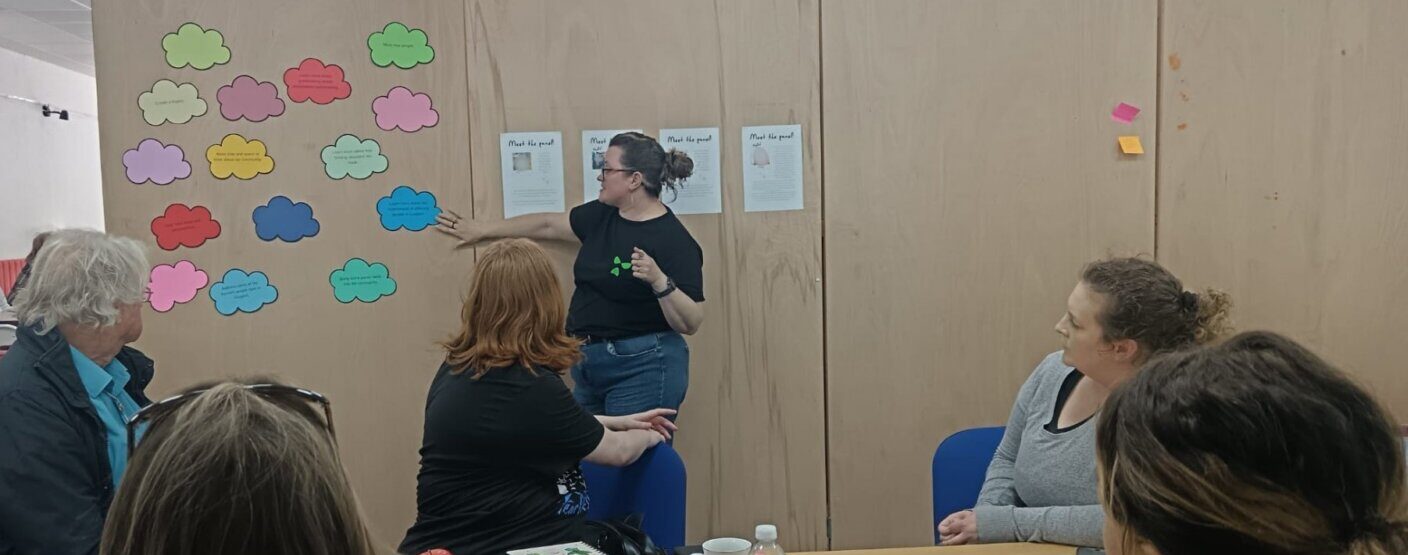
Twelve local people came together to form the panel and design a new physical activity grant. Shaping everything from the eligibility criteria to how funding would be allocated.
The fund was named ‘Get Going Gosport!’ and was the result of six workshop sessions, led in partnership with Camden Giving, to upskill the panel and support them through a decision-making process.
Now that submissions have closed, we wanted to reflect on and share what we learnt so that other organisations who are interested in Participatory Grantmaking can give it a go.
Wanting to try new things and actually trying them are two different things, because implementation needs foundations.
First and foremost, for this piece of work, one of the biggest things needed was an organisational recognition that the community has the answer. This is something we’ve developed over several years of place-based working, and it hasn’t always been easy. We’ve been able to shift our thinking to acknowledge that as the funder we may be experts in the process, but individuals and communities are the experts in their own experiences, so we prepared to hand over the reins.
Similarly, we also needed senior managers and trustees who were willing to take what some might see as a risk. We were trusting a group of people we didn’t know (at the start) to make decisions about money. And what we saw was that people took that responsibility incredibly seriously.. The panel members were so careful, considerate, and deeply aware of the responsibility.
Once the pilot was underway, we learnt a lot – probably too much to fit into one blog! So, in the spirit of keeping things useful, here are a few of the things that really stood out.
In one session, we slipped back into grantmaking terminology and jargon, forgetting that for some of the panel this was completely new territory. You could feel the atmosphere shift. We learned to take our time introducing new words and concepts, build in opportunities to go back over things to help people remember them, and find accessible ‘plain English’ ways to talk about our topics.
People naturally sit in the same space around the table when they come to the same place every week, so likely sit next to the same person, which can reinforce the same thinking pattern. We changed the layout to one long, banquet table and that physically brought people closer together and encouraged different conversations.
(If you do this too, just be mindful that even small changes like that can be unsettling, especially for neurodivergent people. We acknowledged the change, gave people time to settle, and kept other familiar things in place, like tea, fidget toys, and a warm welcome.)
We knew we wanted a venue that was easy to access, whether people were walking, taking the bus or driving, but we underestimated just how important that actually was. We used YourSpace, a community hub on the high street. It was familiar to some panel members already, physically accessible and so incredibly welcoming. Staff began to recognise and greet us each week. It helped the whole process feel rooted in the community rather than like we had parachuted in.
Building a rapport with someone does not automatically mean people will tell you what they need to be able to access and understand an opportunity. Sometimes people don’t know how to articulate it, or they have been let down too many times before so won’t open up again. Having enough facilitators in the room meant we could have regular 1:1 conversations and participants could get the support they needed when they needed it.
If you are thinking about trying something similar, these are the bits of advice we would pass on.
So, why is it worth doing? For us, one of the clearest signs was the response. We received 41 grant applications(!!), which was far higher than we anticipated. We had only been aiming for 10.
And, of course, there is the wider community good. The impact on the panel was incredibly rewarding to witness and be a part of creating. One participant felt very anxious when speaking and often apologised afterwards, saying things like “I’m sorry, I spoke too much” or “does that make sense?” By week four, her confidence had grown so much that she came to a session on her own, something she said she had never been able to do before.
Another person joined thinking she would not say much and did not expect to have much to contribute. By weeks five and six, she was outspoken, decisive and opinionated, and the group looked to her for that. Watching that confidence grow was one of the strongest reminders that participation is not just a tick box exercise, it really does make a difference to people’s lives.
That’s a whistlestop tour of what we learnt from our experience of doing Participatory Grantmaking. But we’re happy to share more! If you want to speak to us further or have any questions, please contact: grants@energiseme.org
Helping us tackle inactivity to boost health and happiness